


 Request advice
 Based on the actual situation


Key-operated lock
A missing key, a broken fragment and a stiff mechanism are different faults. Explain whether the existing key is complete and whether behaviour changed suddenly. Do not force a sticking key to turn.
When your safe stays locked.
Missing key, unresponsive electronics or a rejected code? The manufacturer, model and lock type help with an initial assessment. The approach and possible subsequent costs depend on the actual safe.
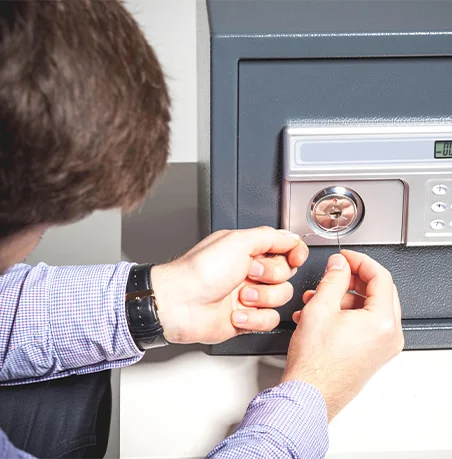
A furniture safe, a security cabinet and an older mechanical combination safe present different requirements. Manufacturer, model and exterior photographs or an accessible rating plate are useful. Explain whether it is built in or anchored. Do not send personal codes in an open enquiry.

Does the keypad respond, is there an error message or will the existing key not turn? These observations help more than repeated attempts. Depending on the model, power supply and lockout periods may be relevant. Follow manufacturer instructions only; force or improvised drilling can put the mechanism and contents at further risk.
Discuss your situation
Whether a low-damage opening is possible depends on construction, fault and security features. Discuss the method, potential damage and subsequent repair separately before work. Explain whether you intend to keep using the safe. Evidence of entitlement is required even when the safe is located on your premises.
Discuss your situationA missing key, a broken fragment and a stiff mechanism are different faults. Explain whether the existing key is complete and whether behaviour changed suddenly. Do not force a sticking key to turn.
Displays, sounds and the exact model help assessment. Lockout periods and power arrangements are product-specific. Repeated entries and improvised external power sources can complicate diagnosis. Follow the manufacturer’s instructions only.
Construction, operation and the history of the fault matter. A photograph alone cannot establish whether operation or a technical fault is responsible. Do not place confidential combinations in an open email or message.
Anchoring, installation and weight can affect access. Explain whether the safe is freestanding, inside furniture or wall-mounted. An existing security classification helps identify it but does not replace assessment of the actual lock problem.
An initial enquiry needs the safe description and fault, not usually an inventory of its contents. Photographs should show only necessary technical information. Establish entitlement, access to the installation and, for businesses, responsibility before work.
Opening may leave the lock, boltwork or other parts needing repair. Parts availability, age and intended future use influence the decision. If a specific security requirement applies, establish whether it remains met after changes. An opened container is not automatically a fully functional safe again.
Provide manufacturer, model, lock type and symptoms. Do not send confidential combinations.
Consider opening, potential damage and subsequent repair separately. Explain whether you intend to keep using the safe.
Establish entitlement, anchoring and access. Removal or transport require separate agreement.
After opening, discuss lock operation, repairs and any applicable security requirements.
Safe type, lock, fault and installation determine the quotation. Subsequent repairs and replacement parts need separate consideration. There is no meaningful universal price for every safe.
Prices and cost factorsDo not send access codes or confidential security details in an open enquiry.
Prepare an enquiry
Tell us whether the door has simply closed, is locked or has a fault. We discuss the possible approach, travel and costs before you place an order.
View service
A lock emergency needs clear information. Tell us your location and the problem with your door or lock. Call to discuss availability, expected travel and costs.
View serviceErol is based at Sickingenstraße 40, 10553 Berlin-Moabit. Provide the property address for your visit or consultation. Availability, appointments and travel are agreed directly. Listed locations are service areas, not additional branches.
All service areasThis depends on the opening method, condition and available replacement parts. Discuss subsequent work and costs before starting. Continued use cannot be guaranteed for every model.
No. Describe the problem and provide the manufacturer and model. Do not include access codes or confidential information in an open message.
Photos help identification but do not reveal every fault. Model, lock type and symptoms need assessment together. Ask what work and possible subsequent costs the quote includes.
Not without agreement. Weight, anchoring and installation can create risks. Describe its location; removal or transport is not automatically included in opening.
Provide the location, exact situation and known manufacturer or model details. Photos may help but cannot replace every on-site assessment. You must be entitled to access or authorise changes.
Safe type, lock, fault and installation determine the quotation. Subsequent repairs and replacement parts need separate consideration. There is no meaningful universal price for every safe.
This depends on condition, suitability and compatibility. Discuss required replacement parts and their costs before work. Reuse of every existing component cannot be promised.
Call 0176 61218765 or prepare an email on the contact page. For urgent matters, call directly. Timing, availability and travel are agreed for your address.

Opening, lock replacement, vehicle opening and security systems are different tasks. A precise description helps identify the right service.
Read articleProfessional tools do not replace diagnosis. Latch, bolt, cylinder and fittings determine the appropriate method.
Read articleMissing key, unresponsive electronics or a rejected code? The manufacturer, model and lock type help with an initial assessment. The approach and possible subsequent costs depend on the actual safe.


 Call Erol